
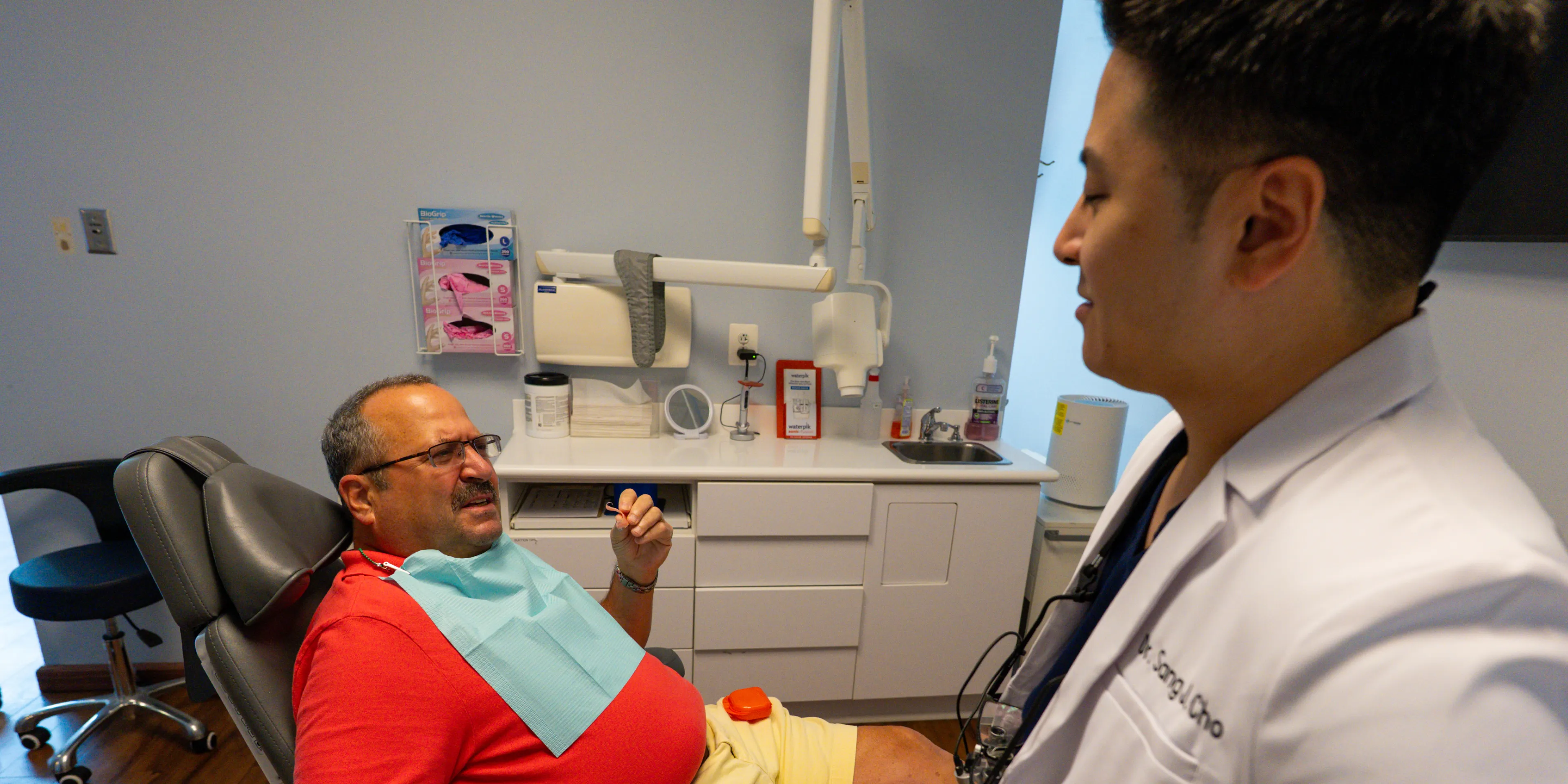
Dental Implant FAQ in Germantown, MD
We Take Your Insurance
What Are Dental Implants and How Do They Work?
Dental implants are small titanium posts surgically placed into the jawbone to act as artificial tooth roots. Once in place, they provide a stable foundation for a new restoration, such as a crown, bridge, or denture. Over time, the dental implant fuses with the surrounding bone through a process called osseointegration. This secure connection allows dental implants to fuse with the jawbone and function like natural teeth, restoring your ability to chew, speak, and smile with confidence.
Dental implants also help preserve the jawbone, preventing the bone loss that often occurs with missing teeth. Dentures do not protect from this loss of jawbone. Unlike traditional bridges, dental implants do not require reshaping neighboring teeth, making them a conservative yet durable option for tooth replacement.
What is the Process for Getting Dental Implants?
The implant process will begin with a consultation and comprehensive dental exam. Our dentist will review your medical history, take diagnostic images, and discuss your goals for treatment.
From there, the dental implant process typically follows these steps:
- Implant placement – The titanium post is surgically inserted into the jawbone.
- Healing period – The bone fuses with the implant over the course of several weeks to months (3 - 6 months on average).
- Abutment placement – A connector piece is attached once healing is complete. This will connect the implant post with the restoration.
- Restoration – A crown, bridge, or denture is placed to complete your new smile.
The timeline for dental implant treatment can vary depending on individual healing, the need for sinus lift procedures, or the number of teeth being replaced. The entire time frame for dental implants can last several months, up to one year.

How Long is the Recovery Process After Dental Implant Placement?
Recovery after implant surgery is generally smooth and well-tolerated. Most patients experience mild swelling, soreness, and tenderness in the first few days. These effects usually subside within a week. The deeper healing, where the implant integrates with the bone, can take several months.
During this time, patients should follow the dentist's post-surgical instructions carefully. This may include eating softer foods, avoiding pressure on the surgical site, and maintaining excellent oral hygiene. Once the bone has fully fused, the final restoration can be placed, allowing you to enjoy a strong, fully functional smile.
How Will I Know if I'm a Candidate for Dental Implants?
Candidates for dental implants should have healthy gums, adequate jawbone density, and be free of uncontrolled health conditions that may affect healing. A full evaluation, including X-rays or 3D imaging, will help determine whether implants are a good option.
In cases where bone density is low, bone grafting or sinus lift procedures may be recommended to strengthen the foundation for implants. Patients who smoke, have chronic conditions like diabetes, or take certain medications may need special consideration before treatment.
The best way to know if you qualify is to schedule a consultation with New Life Dental, so we can create a personalized plan for your smile.






Are There Different Types of Dental Implants?
There are several types of dental implants designed to meet different needs. The dentist will recommend the option that best suits your oral health, bone structure, and long-term goals.
- Single tooth implants – Used when one tooth is missing and needs replacement with a crown.
- Implant-supported bridges – Replace multiple missing teeth in a row without affecting neighboring teeth.
- Implant-supported dentures – Provide greater stability compared to traditional dentures.
- All-on-4 implants Germantown – A technique that replaces an entire arch of teeth using just four strategically placed implants.

What is the Most Frequently Asked Question About Dental Implants?
One of the most common questions patients ask is: "Do dental implants hurt?"
During the procedure, local anesthesia ensures you remain comfortable. Many patients report feeling less discomfort during implant placement than they expected. After surgery, mild soreness or swelling is common, but this can usually be managed with over-the-counter pain relievers and following the dentist's care instructions. Most people find the benefits of a secure, natural-looking tooth replacement far outweigh the short recovery period.

Implants in Germantown MD
For patients searching for reliable tooth replacement, New Life Dental is proud to provide advanced dental implants that Maryland patients can count on. Whether you need a single tooth replaced or are interested in full arch solutions, our team offers personalized care using the latest technology. We understand the importance of both function and aesthetics, and our goal is to restore your smile so you can eat, speak, and live with confidence again.
If you've been considering dental implants, our team is here to help guide you through every step of the process. From your first consultation to your final restoration, we'll provide the care and expertise you need to achieve a healthy, lasting smile.
Contact New Life Dental today to schedule your consultation and learn more about how dental implants can improve your quality of life. Your journey to a confident smile starts here.
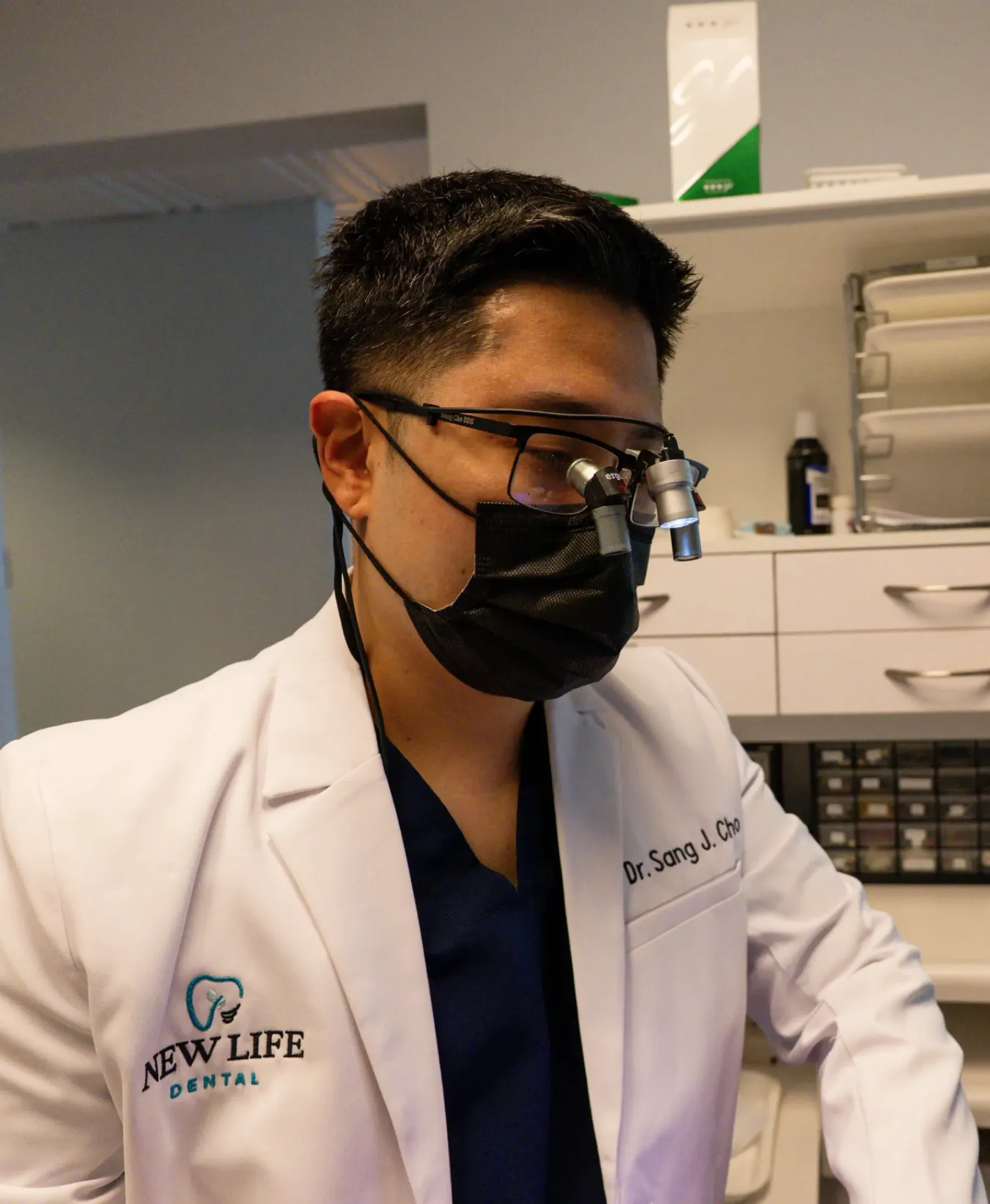
Frequently Asked Questions
How do I get started?
Schedule a consultation online or call our office. Dr. Cho will perform a thorough evaluation, review your imaging, and give you a clear picture of your options, timeline, and investment before any decisions are made.
Does insurance cover dental implants?
Coverage for implants varies widely by plan. Some PPO plans cover a portion of the procedure. Our team will verify your benefits before treatment and walk you through your out-of-pocket costs. Financing options including CareCredit, Alphaeon Credit, and Cherry are available to make treatment more accessible.
What is the difference between a dental implant and a bridge?
A dental bridge fills a gap by anchoring a false tooth to the crowns placed on the two teeth on either side of the gap. This requires those healthy teeth to be filed down to support the bridge. An implant stands independently, preserves the surrounding teeth, and stimulates the jawbone to prevent bone loss. For most patients, an implant is the superior long-term solution.
Can I get an implant if I smoke?
Smoking significantly increases the risk of implant failure by interfering with the healing process. Dr. Cho will discuss your situation honestly during your consultation. Patients who are willing to stop smoking during the healing period may still be candidates.
How do I care for a dental implant?
You care for an implant the same way you care for a natural tooth. Brush twice daily, floss regularly, and attend routine checkups. There are no special adhesives or removal routines. The implant functions and is maintained just like the rest of your teeth.
What if I don't have enough bone for an implant?
Many patients who have experienced bone loss are still candidates for implants after a bone grafting procedure. Dr. Cho offers ridge preservation, ridge augmentation, and sinus lift procedures to rebuild bone volume when needed.
Am I too old for dental implants?
There is no upper age limit for dental implants. What matters is your overall health, bone density, and gum condition. Dr. Cho evaluates each patient individually and will give you an honest assessment of whether implants are a viable option for you.
How long does the entire implant process take?
The timeline varies depending on your situation. A straightforward single implant from placement to final crown typically takes three to six months. If bone grafting is required first, the process takes longer. Dr. Cho will give you a realistic timeline during your consultation.
Is the implant procedure painful?
Most patients are surprised by how manageable the procedure is. Local anesthesia is used throughout, and oral sedation is available for patients with anxiety or those who want to be more relaxed during treatment. Post-procedure discomfort is typically mild and manageable with over-the-counter pain relief.
How long do dental implants last?
With proper care and regular checkups, dental implants can last a lifetime. The crown attached to the implant may need to be replaced after 15 to 25 years depending on wear, but the implant post itself is designed to be a permanent solution.
Visit Us in Germantown, MD
We’re easy to reach on Germantown Road in Germantown, MD, and welcoming to new patients from nearby Gaithersburg and Clarksburg. From routine cleanings to smile-restoring implant care, we make it simple to get answers and move forward with confidence.

You'll find us inside Adventist HealthCare Germantown Emergency Center, a premier Class A medical facility, just across from Town Center & Century Station.
Parking: On-site parking available. Please arrive a few minutes early for your first visit.