Dental Bridge in Germantown, MD
We Take Your Insurance
Types of Dental Bridges
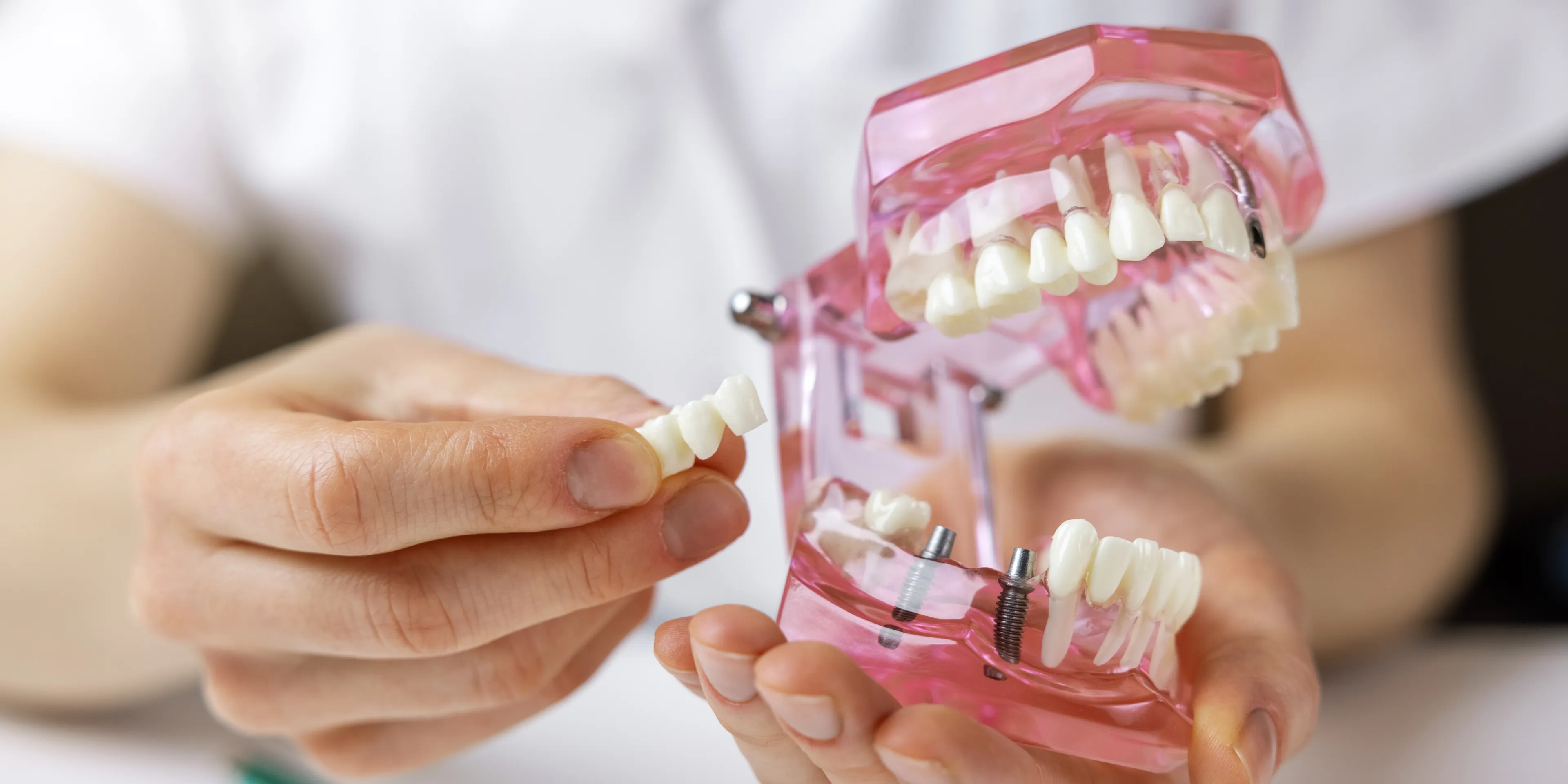
We have three types of dental bridges available: traditional, cantilever, and Maryland bonded. Traditional bridges can be supported by either natural teeth or implants on the sides of the gap. These are the most commonly used styles of a dental bridge. Cantilever bridges are far less common now as they tend to be more fragile than other styles of bridges. These only attach to a tooth on one side of the gap. These are not recommended for replacing your back teeth, due to the force involved in chewing. Maryland bonded bridges are supported by a metal or porcelain framework. These have wings, typically on one side of the gap, which are resin-bonded to your natural teeth.






Dental Bridge Materials
The framework of certain bridges will be made of either porcelain or metal, such as the wings in Maryland bonded bridges. The gums are made of a colored plastic to mimic a natural gum look. The pontic (artificial) teeth, however, can be made of a variety of materials. The specific choice depends on the area of the mouth. For example, back teeth must be stronger to support chewing. We use either gold or a metal alloy for them. For the front teeth, aesthetics is important, so we tend to use porcelain for these teeth.
Bridge Placement
In order to place your dental bridge, we first need to prepare the abutment (adjacent) teeth. This involves shaving down some of the enamel and making dental impressions of the existing teeth. This lets our lab customize a dental bridge to fit perfectly to your mouth. You will receive a temporary bridge at the first appointment to protect your teeth while you wait for your permanent bridge.
At the second appointment, our dentist will remove your temporary bridge. We will place the permanent bridge and check the fit and appearance. You may need to come back another time or two during the healing process to ensure that the bridge continues to fit well. This is because as you heal your gums will change shape slightly. After a few weeks, healing should be complete, and we will be able to permanently cement the bridge into place. Dental cement is hardened under a special type of light so that it becomes a permanent fixture.
You will be able to clean the bridge just like you would your natural teeth. Make sure you continue with oral hygiene so that bacteria do not get trapped under or in the bridge.
For more information on dental bridges, call New Life Dental.
Visit Us in Germantown, MD
We’re easy to reach on Germantown Road in Germantown, MD, and welcoming to new patients from nearby Gaithersburg and Clarksburg. From routine cleanings to smile-restoring implant care, we make it simple to get answers and move forward with confidence.

You'll find us inside Adventist HealthCare Germantown Emergency Center, a premier Class A medical facility, just across from Town Center & Century Station.
Parking: On-site parking available. Please arrive a few minutes early for your first visit.